
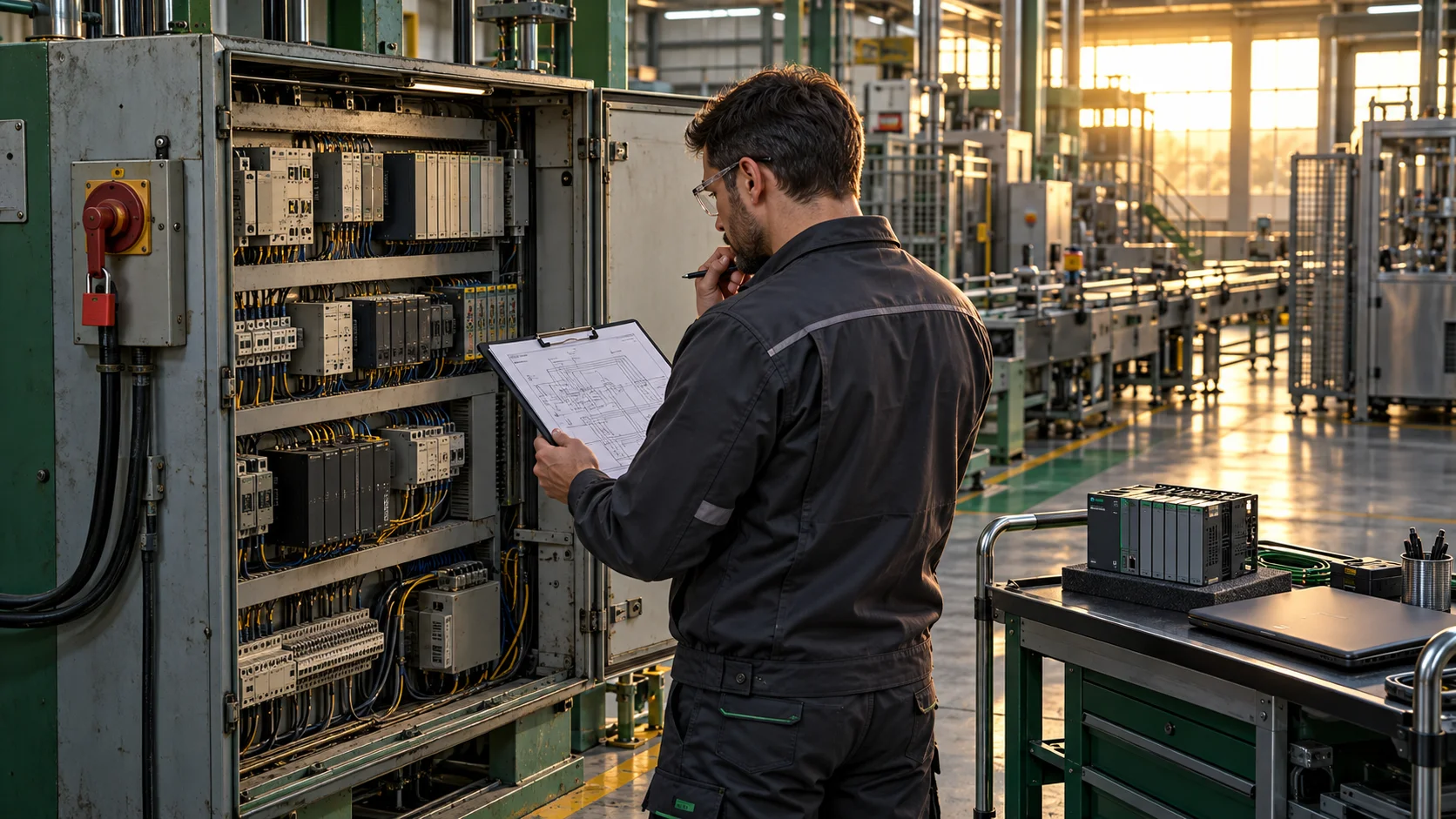
Production stops. Responsibility doesn't. When a customer sets aside a production break to upgrade a machine, they entrust the team with much more than a modification: they entrust them with restarting their operations.
Industrial revamping often means working on a system designed by others. Hardware with a history, unfamiliar software, logic built up over time and documentation that may be incomplete. Before changing anything, you need to understand how the whole system works and why certain decisions were made.
A seemingly limited change can affect sequences, communications, alarms and other machines on the line. Reading the code is not enough: it must be compared with the plant's actual behaviour and the experience of the people who use it every day.
Working across industries also means recognising different constraints. Cycle times, product characteristics, process conditions and operating methods vary between applications. An effective solution must respect that context, without assuming that what works on one machine will also work on the next.
This is why the work begins before the shutdown: analysing modifications, checking documentation and backups, preparing components and software, and defining tests and alternatives for unexpected situations. Priorities, available time and acceptance criteria need to be agreed with the customer.
When production stops, every hour counts. Deadline pressure is real, but it cannot replace a structured method or reduce the necessary checks. The aim is to return a working machine within the agreed timeframe, with modifications verified in the process and safety conditions assessed in relation to the work performed.
Handover means more than simply switching a machine on. It means checking the affected functions, verifying the cycle with the customer, updating documentation and explaining the changes to operators.
This is the responsibility of revamping: understanding what exists, making considered changes and preparing the restart. Do you have a machine to upgrade during your next production shutdown? Let's talk before it stops.
Let's discuss your project.
We start with your process and production requirements.
Contact us →← Back to news